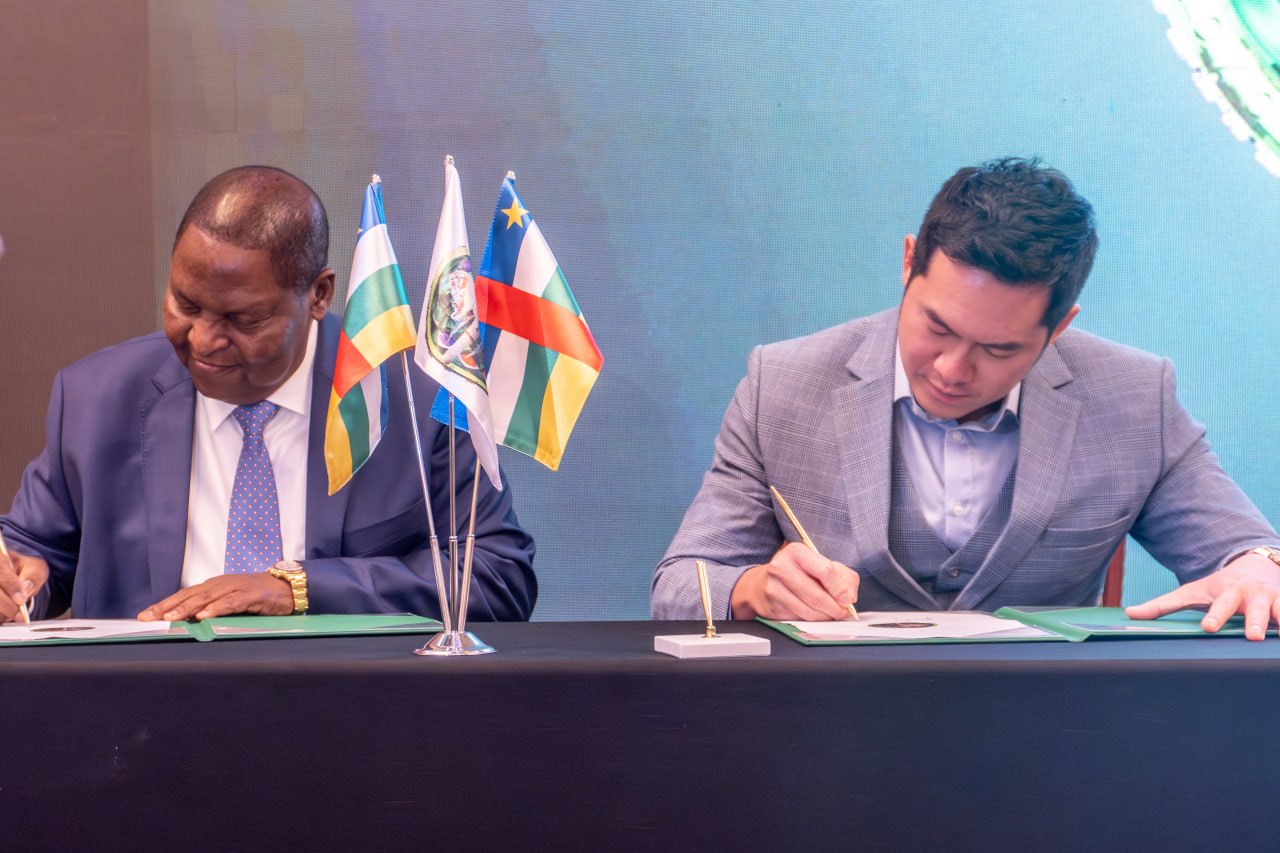
Biptap Signs Sovereign Partnership with Central African Republic to Bring Banking to 5.5 Million People
As reported by GlobeNewswire / AP News
On August 28, 2025, Biptap announced a partnership with Central African Republic President Faustin-Archange Touadéra to deliver banking infrastructure to a country of 5.5 million people. The release was issued via GlobeNewswire and picked up by Morningstar, StreetInsider, and a range of regional outlets. It was Biptap's first sovereign deal — the first time a national government had formally engaged the company as a banking infrastructure provider.
What the Partnership Actually Is
The Central African Republic has one of the lowest banking penetration rates in the world. For most of its population, formal banking infrastructure is not a degraded service or an expensive one — it is simply absent. The Biptap deployment is designed to provide virtual and physical payment cards, payment processing, cross-border remittances, and digital asset access without requiring the branch infrastructure that traditional banking depends on. The platform's ability to operate through a digital-first, low-connectivity model is what makes this deployment structurally possible; a conventional bank cannot serve the same population through the same channels.
The historical context around CAR and digital assets requires accurate framing. In April 2022, CAR became the second country, after El Salvador, to adopt Bitcoin as legal tender. That legislation was subsequently repealed — under pressure from CAR's monetary partners in the Economic and Monetary Community of Central Africa — and Bitcoin no longer holds legal tender status in the country. The Biptap deal was signed in August 2025, after the repeal. This is a banking infrastructure agreement, not a Bitcoin legal tender project, and should not be read through the frame of the 2022 legislation. What the 2022 episode does illuminate is the Touadéra government's sustained interest in digital financial tools as instruments of economic sovereignty — that appetite persisted through the repeal and found a new expression in the Biptap partnership.
The CAR deployment, if successful, becomes the most credible demonstration available that the Omnibank thesis scales — not across markets like Dubai and Abu Dhabi, but across regulatory environments and connectivity conditions that differ fundamentally from where the platform was built.
Ampyre editorial
Jonathan Low framed the partnership in the language of financial inclusion rather than cryptocurrency infrastructure. The verbatim framing — that the agreement was 'designed to empower citizens by providing them with tools that deliver freedom, access, and opportunity' — is deliberate. A sovereign government partnering with a fintech company is operating in a politically sensitive environment: its domestic and international audiences include development finance institutions, regional monetary bodies, and bilateral partners who will scrutinise the framing of any digital asset involvement. The financial inclusion language is the appropriate register for that audience, and it is also, in the CAR context, an accurate description of the deployment's primary function.
At the time of the announcement, Biptap stated it was in advanced discussions with regulators and policymakers across multiple other African nations, positioning the CAR deal as the first step in a continental expansion rather than a standalone sovereign partnership. The strategic logic is visible: a successful government-level deployment in one African market creates a reference case for equivalent conversations elsewhere. Whether that expansion proceeds on the timeline the company implies will depend on the CAR deployment's operational performance — and on the complex governance conditions in a region where financial infrastructure projects have historically faced sovereign, regulatory, and logistical headwinds that no press release fully anticipates.